













How To Prune Roses
Pruning is an important part of rose care that can sometimes seem daunting to new gardeners. That's why we've created a comprehensive guide to make the process of pruning your rose bushes understandable and easy.
Pruning is about more than just shaping the way your rose bush looks. It also improves the health of your plant, prevents disease, and encourages better and more robust flowering. There are different pruning strategies for different times of the year, but the goal is always to open up the plant to provide better circulation and to prevent fungal growth.
At Heirloom, we use the acronym PRUNE to remember the basic pruning process. This method applies to the most popular garden roses such as Hybrid Teas, Shrubs, and Floribundas, but Climbing Roses and Ramblers require more specialized techniques.
Follow the Acronym PRUNE
P - PREPARE THE PLANT
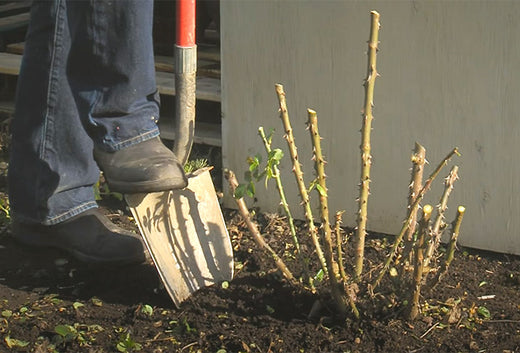
- Cut the plant back to about waist height so you can work safely.
R - REMOVE ALL BROKEN, DEAD, DYING, OR DISEASED WOOD
- Branches that look dry, shriveled or black should be removed as they will no longer produce new growth. The healthy canes will be brown or green and firm.
- Remove canes that are crossing or rubbing together, as they will create weak spots.
U - UNDERSTAND THE PLANT
- Know what type of rose bush you are pruning and how you want the bush to look as it grows out.
- Shape the plant with this future growth in mind.
- Make final cuts at a 45-degree angle and about ¼ inch above outward-facing bud eyes.
N - NOTHING LEFT BEHIND
- Clean up all cuttings, dead leaves, and other debris from around the plant. Do not compost as it could spread pathogens.
- Leaving the area as clean as possible will minimize the growth of diseases.
E - ENJOY YOUR ROSES
- That’s it! Enjoy your hard work!
- If you want to enjoy some cut roses, cut the stem right above the first five-leaflet leaf under the flower and immediately place the cut stem into a clean bucket of lukewarm water.
A Detailed Look at Pruning
Whether you are deadheading blooms during the summer or performing your annual spring cutback, it is important to consider how a rose grows. How you prune a particular rose will always be the same. Even a beginner gardener can prune well! Roses, unlike other plants, can send new shoots out of old wood. An older own-root rose can be rejuvenated by cutting it right to the ground, and it will still produce new shoots. This means that even a novice pruner would have a hard time killing a rose bush by pruning.
We know you can do this. Each time you practice pruning, you will get better!
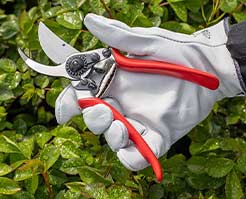
Looking for pruners? We have a variety of pruner options to best fit your needs! Shop our collection of pruners and shears here or read this blog post to learn which pruner is right for you.
Let’s take a deep dive into proper pruning methods.
Where to Make a Pruning Cut
- Pruning cuts should always be made just above a bud eye. A "bud eye" is the area on the stem where branching occurs. In the summer, it's easy to figure out where to prune, just cut right above a set of mature leaves.
- On roses, there is always a dormant bud where leaves attach to the stem. You'll have to look a little harder to find the bud eye on dormant or older canes; they are located just above the crescent-shaped leaf scars along the stem.
Learn How to Identify a Latent Bud or “Bud Eye” and Leaf Scar


New growth will be forced even if pruning cut is severe (3" diameter)
Trending Articles